
CARBON CREDIT
The impact your soil and regenerative farm & ranch practices have on CO₂ is valuable. And you're already doing the work.
TURNING CARBON STORAGE INTO FARM & RANCH INCOME
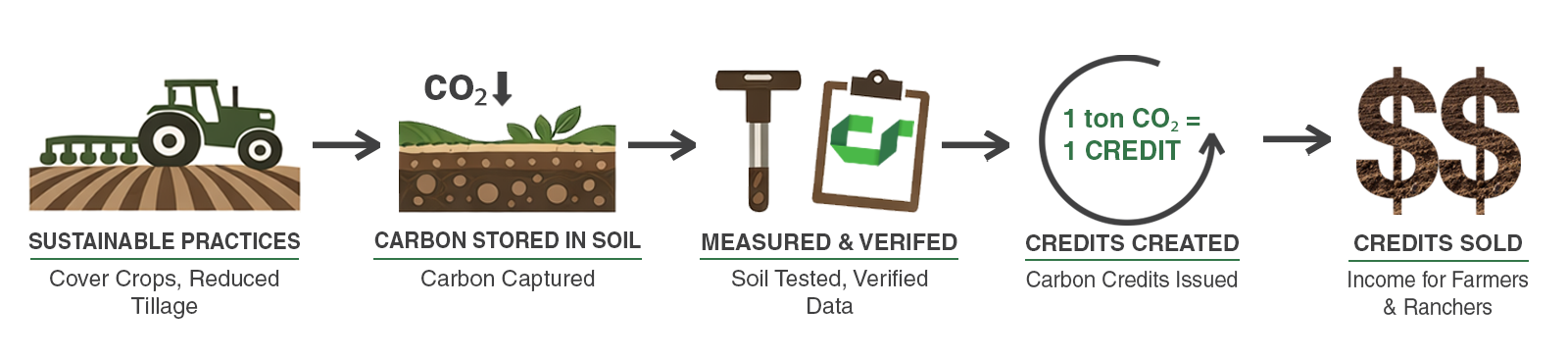
Carbon farming uses proven agricultural practices to increase storage of atmospheric carbon in the soil.
When carbon is stored and verified, it can be converted into carbon credits that companies purchase to meet net-zero goals.
CTS connects farmers & ranchers with carbon buyers, enabling you to diversify profitability across every acre on your farm.
WHAT IS CARBON FARMING?
Carbon farming includes practices that support soil health while increasing carbon storage.
-
Reduced tillage / no-till
-
Cover crops
-
Improved nitrogen timing & management
-
Crop rotation
-
Manure or compost applications
WHY CARBON? AND WHY NOW?
The carbon market is gaining momentum across agriculture. Businesses are actively seeking verified carbon reductions, and farmers & ranchers using sustainable practices may be positioned to benefit.
CTS provides the data carbon marketplaces need to verify and sell carbon credits — helping growers increase profitability through practices already implemented in the field.
WHY CROP TECH?
Crop Tech is built on data. We help turn your field practices into marketplace-ready documentation by organizing the information verification teams and carbon marketplaces require.
-
Historical and current field data
-
Field boundaries + practice details
-
Fertility/soil data support for verification
-
Marketplace-ready reporting
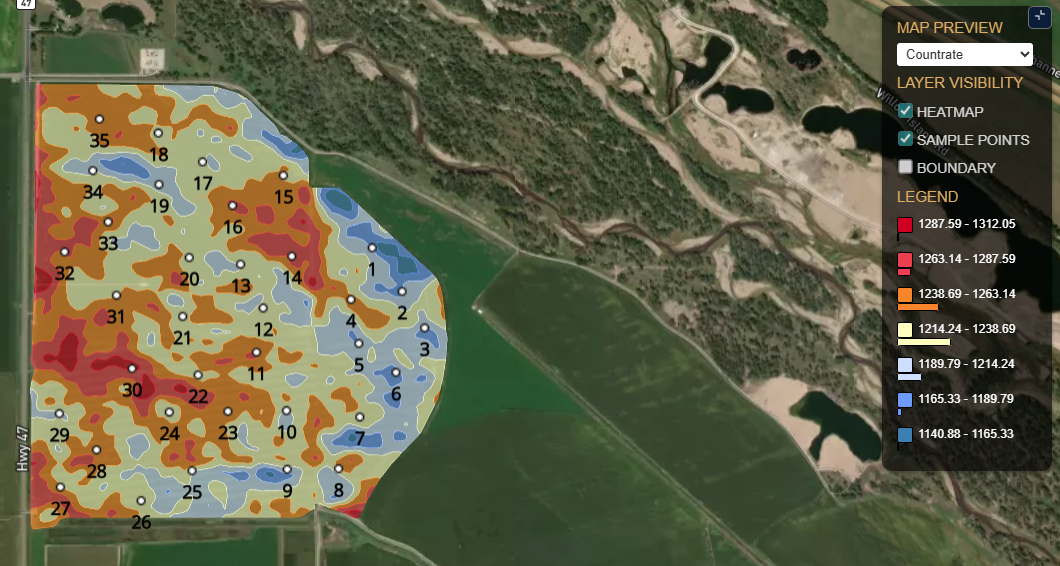
If you've already working with CTS, most of the work in the field is already done. We have the data that carbon marketplaces need to verify and sell carbon credits—helping you further increase profit through your sustainable farming & ranching practices.
THE PROCESS: TURNING CARBON INTO INCOME
Here's how:
PRODUCER
Partner with CTS to find the best carbon farming & ranching advice and available programs, commit to making no major practice changes for the duration of the program, and ensure any required landowner approvals are in place.
CROP TECH SOLUTIONS
CTS vets all available options to identify the best value for each client, provides access to a preferred marketplace with established field boundaries, and delivers both historical data as well as current and future machine data to support informed, data-driven decisions.
ENROLLMENT & BASELINE
CTS works with the producer to enroll eligible acres, establish field boundaries, and build a verified baseline using historical and current field, soil, and machine data to ensure accurate carbon measurement and program eligibility.
MARKETPLACE
The open marketplace connects producers directly with carbon offset buyers, requires no product commitments, and offers program and agreement support through CTS resulting in verified, sellable carbon credits.
VERIFACTION
A third-party, independent verifier is selected by the marketplace vendor, works directly with CTS to review fertility and field data, and completes verification on a recurring basis every few years to ensure program integrity and accuracy.
PAYMENT
Carbon value is determined by the amount of carbon stored in the soil per acre, calculated in one-ton CO₂ units and priced based on current market conditions.
FREQUENTLY ASKED QUESTIONS
What are the long-term considerations of selling carbon credits?
Selling carbon credits typically involves a multi-year commitment tied to specific farming practices and data reporting. While program details vary by marketplace, growers should understand that participation may limit certain management changes during the contract period.
Do I have to change my farming practices to participate?
Not necessarily. Many programs don’t require major changes if you already use conservation/regenerative practices.
Can I participate if I rent ground?
Possibly — landlord communication/approval may be required depending on the program.
Do I receive a check, or is this a tax deduction?
Carbon credits are not a tax deduction. When credits are sold, farmers are paid for them — typically as a direct payment through the marketplace. How payments are reported should be discussed with your CPA.
How does CTS connect farmers with buyers of carbon credits?
Crop Tech connects farmers with open carbon marketplaces by providing the verified ag data required to generate and sell carbon credits.
The marketplace then matches credits with buyers and manages the transaction.
Can I exit a carbon program once I enroll?
Carbon programs typically involve multi-year commitments. While some programs may allow early exit, doing so could result in penalties or loss of future payments. Program terms vary, so it’s important to fully review agreement details before enrolling.